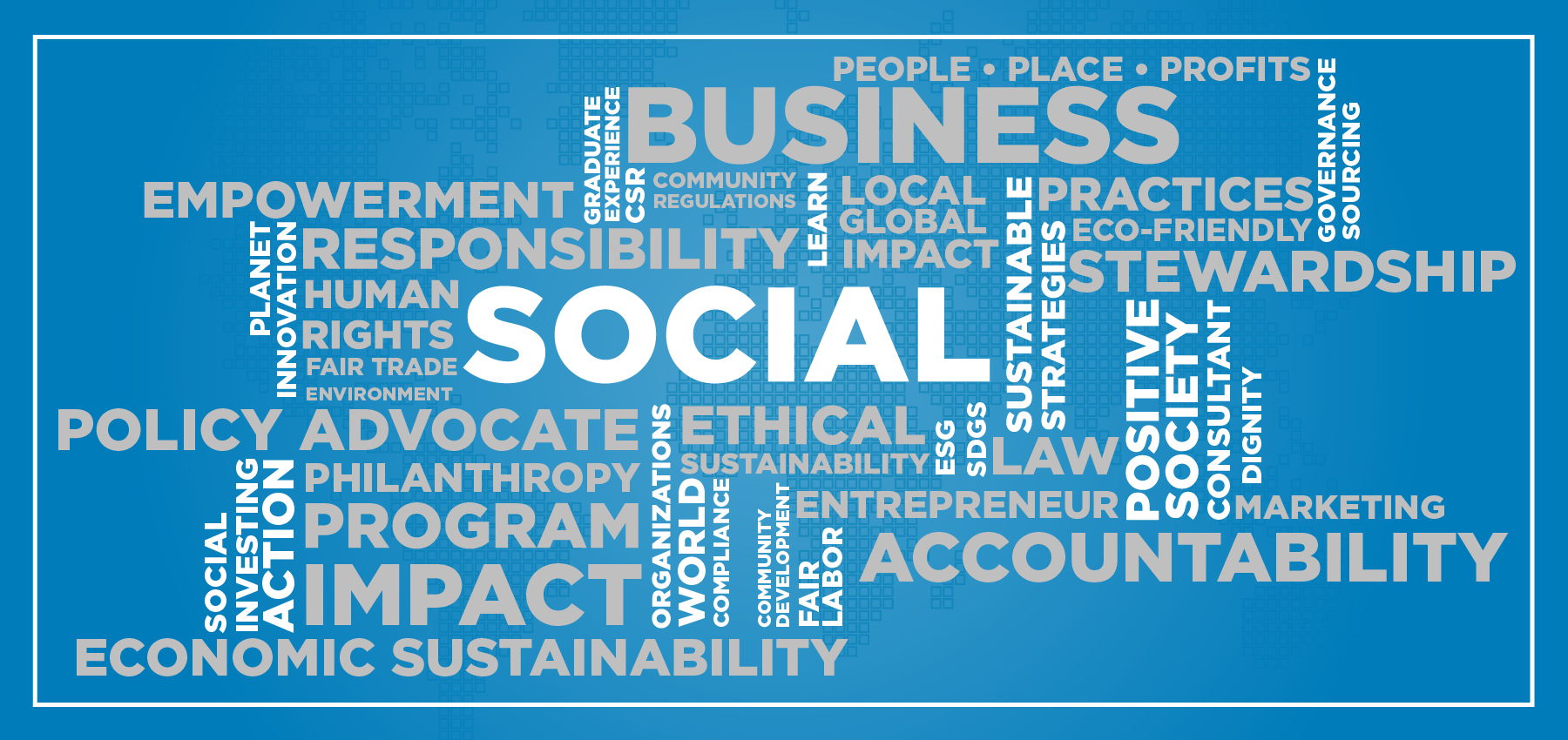
Our approach to Social Responsibility & Impact in Business
Experience UConn's blending of theory with practice.
Our Graduate Programs in Social Responsibility & Impact in Business (SRIB) at UConn take you beyond theory to embrace socially responsible business practices as a guiding principle for future responsible business leadership. The program empowers students to understand, develop, and embed social responsibility initiatives within business models, preparing them to navigate regulations, implement environmentally and socially responsible practices, and drive positive social and economic change.


What is social responsibility in business?
Embracing and integrating many established areas of thought and practice–including economic, social, and environmental sustainability, fair labor practices, accurate and ethical business reporting, and socially responsible corporate activities. UConn School of Business believes in the moral obligation of companies, organizations, and individuals to engage in decision-making and actions that have positive impacts on society. We strive to instill a holistic commitment to ethical, legal, and marketing responsibilities to society, as well as sustainability, environmental awareness, and international human rights by integrating global frameworks such as the UN Sustainable Development Goals, the UN Global Compact, and the UN Guiding Principles on Business and Human Rights.
UConn’s graduate programs in SRIB also serve as a social impact MBA alternative for students seeking applied, cross-disciplinary, purpose-driven business education.
UConn’s graduate programs in SRIB take a holistic approach, shaping individuals into leaders capable of contributing to both business growth and the betterment of society, aligning with the evolving expectations of responsible and socially conscious business practices.
Social Responsibility in Business Initiatives
SRIB equips students to develop and implement social impact strategies, ESG leadership initiatives, and purpose-driven business models aligned with the UN Sustainable Development Goals. Our program develops effective socially responsible and sustainable contributors to businesses, organizations, and/or consultancies working for positive change.

Social Innovation and Impact
Companies and organizations are developing innovative solutions that leverage their resources and expertise to develop innovative solutions that address social or environmental challenges around the UN Sustainable Development Goals. This can involve entrepreneurial ventures, social impact investing, employee well-being programs, and creating products, services, or experiences that contribute to a sustainable future.

Environmental Sustainability and Responsible Business
Businesses, nonprofits, and public organizations are adopting environmentally responsible practices to reduce their footprint and support the circular economy. Often considered a master's in sustainability or master's in corporate social responsibility alternative, the program explores carbon reduction strategies, sustainable sourcing, recycling initiatives, and environmental stewardship within modern organizations.

Sustainable Marketing and Ethical Business Practices
Effective sustainable marketing promotes responsible consumption, ethical sourcing, fair labor practices, and transparent communications. Students learn how brands, products, and services can create positive social outcomes while supporting business performance and advancing the principles of business for good.

Transparency and Ethical Governance
Social responsibility extends to the governance structure of a company. Reporting practices include disclosing information about business practices, financial performance, and social and environmental impact.

Community Engagement and Social Responsibility
Socially responsible organizations actively invest in communities through philanthropy, educational partnerships, volunteer initiatives, and economic development efforts. Whether pursuing careers in social impact, responsible business, entrepreneurship, or seeking a compelling social impact MBA alternative or a meaningful gap year before law school, graduates gain the skills to drive measurable change.