This semester, students weren’t just learning about marketing. They were building businesses designed to solve real-world problems.
Part of the curriculum for both the minor and MS program in Social Responsibility and Impact in Business, MKTG 3255/5255: Global Issues in Marketing for Social Impact, challenges students to think beyond traditional business models. Taught by Professor Vishal Narayan, Associate Dean for Graduate Business Programs, the course includes a semester-long project where students develop a business concept that is profitable and delivers measurable social impact.
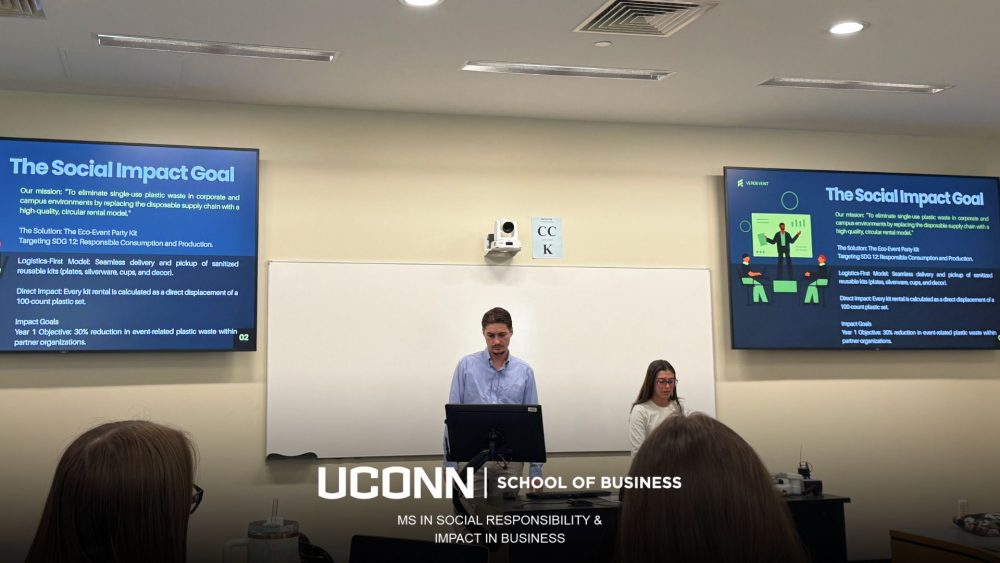
Over several months, students researched, designed, and refined ventures addressing pressing issues in sustainability, health, and economic equity. Their final presentations showed how purpose-driven strategy and business fundamentals can work together.
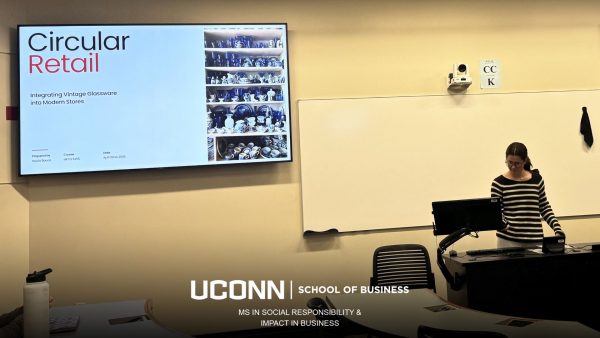
Among the projects was a smart food waste system using QR-coded disposal bins connected to a mobile app that lets users track their habits and earn rewards, turning sustainability into an engaging, behavior-driven experience. Another team explored circular retail by reintroducing vintage glassware into modern storefronts, extending product life cycles while appealing to evolving consumer preferences.
Environmental innovation was also a key focus. One group proposed a kelp-farming model that leverages carbon credits to mitigate ocean acidification, demonstrating how natural climate solutions can align with scalable business opportunities.
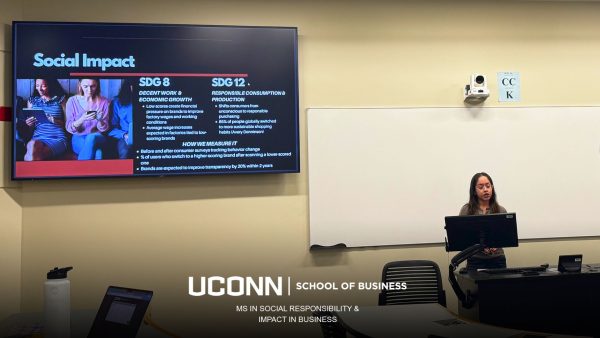
Other teams focused on transparency and social equity. A consumer-facing app aims to independently verify and rank brands based on supply chain practices, empowering informed purchasing decisions. Another initiative connects small businesses with young adults aging out of foster care, creating meaningful employment pathways.
Health and wellness solutions were also front and center. Students developed strategies to promote healthier snacking in the workplace and a service to deliver nutritious, affordable meals to cancer patients, reducing financial strain and barriers to proper nutrition.
Each project reflected a full semester of collaboration, critical thinking, and applied learning. More importantly, they demonstrated that business solutions can be intentionally designed to generate both economic value and measurable societal benefit.
Experiences like this are at the core of the MSSRIB, where students are equipped with the tools and mindset to lead at the intersection of business and social impact.